
Junior, Alison Sanchez, wrote this story.
Specials thanks to producer, Jay Heit, for inviting WHSAD staff and students to the screening and speaking with students at the school the next day.
On January 27, 2025, students of WHSAD were given the opportunity to view 999: The Forgotten Girls at the Striker Center. The screening took place on Holocaust Remembrance Day, commemorating the day when the Red Army liberated Auschwitz-Birkenau, freeing thousands of remaining prisoners and revealing the full extent of the Nazi extermination system to the world.
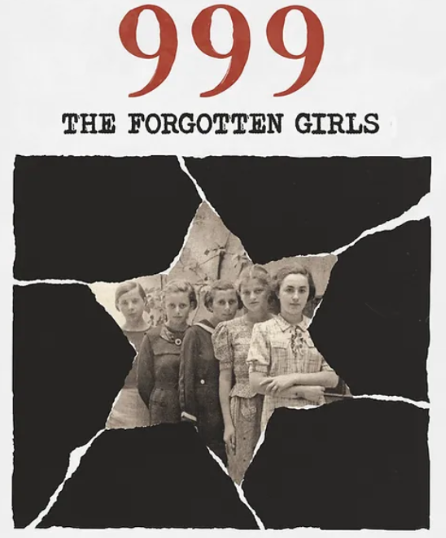
999: The Forgotten Girls tells the true story of 999 teenage Jewish girls who were betrayed by their government after being misled and deceived. The film chronicles the experiences of these young women and girls as they were deported from Slovakia to Auschwitz on March 25, 1942—the first official transport to the camp—where they became both victims and witnesses to the early phase of the Nazi regime’s system of persecution and extermination.
The women that were rounded up by the government consisted of young unmarried Slovakian Jewish women, with the promise of work and pay through factory work in Germany. With Jewish businesses being confiscated and taken away from Jewish workers, many families lost their only source of income and struggled to make ends meet. Many of these young girls believed that they would be going to work, and with the growing economic issues within the Jewish families many went with hopes of being able to provide something for their families.
Despite what these young girls and their families had been told, when they arrived at Auschwitz they had found neither.
The film aims to share the forgotten and erased history of the first young women to be taken into Auschwitz, where they experienced the agony of slave labor, brutality, and starvation. Through firsthand survivor testimonies, rare archival footage, and historical investigation, the documentary presents new information that had gone overlooked and untold.
Stories such as those told in 999: The Forgotten Girls highlight the importance of remembering lesser-known and recognized experiences of the Holocaust. By focusing on the first group of women deported to Auschwitz, the film brings attention to stories that are rarely discussed and included in media regarding the events of the Holocaust. In doing this, the documentary reminds viewers of the lives impacted by the events of the Holocaust, and their individual experiences that are at risk of being lost if not given the platform and opportunity to be shared.
999: The Forgotten Girls tells the story of multiple survivors who were each of these girls trapped in the same situation within the same horrific conditions, and how each of them faced and navigated these conditions in different ways. The film highlights how each of these girls pushed through despite being in an environment built around violence, fear and constant uncertainty for their futures. Before their deportation to Auschwitz, many of these young girls were complete strangers to one another, yet through their shared suffering they found comfort in each other and developed a quiet, unspoken bond built on trust and mutual support. As they faced constant dehumanization, physical exhaustion, and brutal mistreatment the connection these girls built with each other played an important part in their survival. Being able to protect and help others gave many of these young girls a reason to continue despite the difficult situation they were forced into. This sense of community and unity gave the girls a push and motivation to do everything they could to endure and make it out alive.
The film also explored how their faith and religious devotion played an important role in their everyday lives. For many girls there was a sorority of survival, with religion being a key factor. Faith provided them a sense of normalcy and comfort in moments where they felt hopeless.
What makes the film 999: The Forgotten Girls such an impactful and important film is the focus it places on the girls and how they were not only persecuted for being Jewish but also for being young women. Everything that once belonged to them was stripped away, their femininity, autonomy and sense of self were taken away from them one by one. Everything that tied them to their identities as women such as their hair and clothing were taken from them the moment they arrived on to these concentration camps in order to dehumanize these young girls. This film explores how deeply tied their gender was to the identity of these girls and how the loss of that part of their identity really changed their lives following their years in these camps and life outside of these camps after being freed. Sharing these stories allows these women to take back what was taken from them.
Being able to attend this showing offered students a deeper and much more personal understanding of the Holocaust. The stories present within the film were new to many, and intimate. The women on the film shared very difficult and private moments of their lives for the world to see, and for many students seeing their display of strength and perseverance stirred many different emotions.
Student, Elizabeth Cruz, talks about her own experience viewing the film.
To me, this trip and film was very important and moving. The Holocaust is something I’ve been taught, but not to this extent. 999 : The Forgotten Girls by Heather Macadam was such an enlightening watch because I learned about events and traumas in the Holocaust that I never knew about. Learning about a group of girls whose lives were completely turned upside down in a matter of days, and whose story had almost been lost and forgotten by society to be almost erased from history completely was shocking and very important. I am so grateful for being able to attend this trip and learn about a moment in history that not many people were aware of, myself included.
Student, Melissa Macias, talks about her own experience viewing the film.
During the film, 999:Forgotten Girls, I felt a whole bunch of mixed emotions but if I had to describe it I would say I felt mainly sadness. A majority of the girls who were taken were my age or older, and they experienced something so horrendous that shouldn’t have happened in the first place to any kind of person no matter their gender, color or beliefs. These girls went through horrible mistreatment, experiencing starvation over the time they spent there, and being victims of horrible abuse. As well as, not being able to experience happiness or things that young girls their age should be experiencing. Seeing how they were lied to and how many of these girls didn’t survive the abuse they endured because of how horrible and extreme it was extremely saddening. Many of the women had to find a way to survive and endure constant mistreatment in order to be reunited with their families, but the most saddening part of this was that once they were freed many of the girls returned home and were left alone due to their families being killed and persecuted for their religion as well as their houses being burned down so they were left with nothing.
Following the showing of the film on January 27, Jay Heit, the producer for the documentary 999:The Forgotten Girls, spoke to students of WHSAD who attended the trip the next day on January 28. On this visit to the school we were given the opportunity to learn about Jay Heit and his career as well as his more recent work, 999: The Forgotten Girls.
During his visit he spoke about his passion for the entertainment industry and the filming process, sharing various works throughout his career and providing a brief explanation and the story behind each of his works. As he shared his work he talked about what they meant to him, and the value of being able to not only work alongside people but his appreciation for being able to work on stories that he can share with the world. After his brief presentation Jay Heit spoke about what he felt was the most important piece hes worked on, that piece being 999:The Forgotten Girls. This film was one of the most important and impactful films he’s ever been able to assist with and been a part of because of the stories it shares and the meaning behind it.
When asked the question, “When seeing all this new information, how did you decide what you really wanted to include and what you didn’t want in the documentary?” In his response he talked about how important it was to him that he left such decisions to the women on team behind the film because he felt as if he wouldn’t be able to connect and understand these girls as deeply as the women on the team would be. He tried to step back and help the team in different ways, he talked about being able to help by working on funding and helping with the distribution of the film to reach a broader audience. He felt very strongly about leaving the story to be directed and told women and they deserved to have the sole input on the documentary. Heit also told us about his experience in promoting this film.
He said that he had some encounters with people who asked him why Nazi’s weren’t depicted as the main enemies in the documentary, Jay Heit said he understood why the question was brought up and why some people might’ve questioned it but that to him the film focused on the 999 women’s stories and experiences.The documentary wanted to talk about them and highlight them, and their bravery, because of this he felt that there wasn’t anywhere where they would be able to shift the focus. The point of 999:The Forgotten Girls film wasn’t to solely focus on Nazi’s but rather the 999 women and girls to enter Auschwitz who suffered under this regime and fought everyday of their lives to escape and simply live another day.