
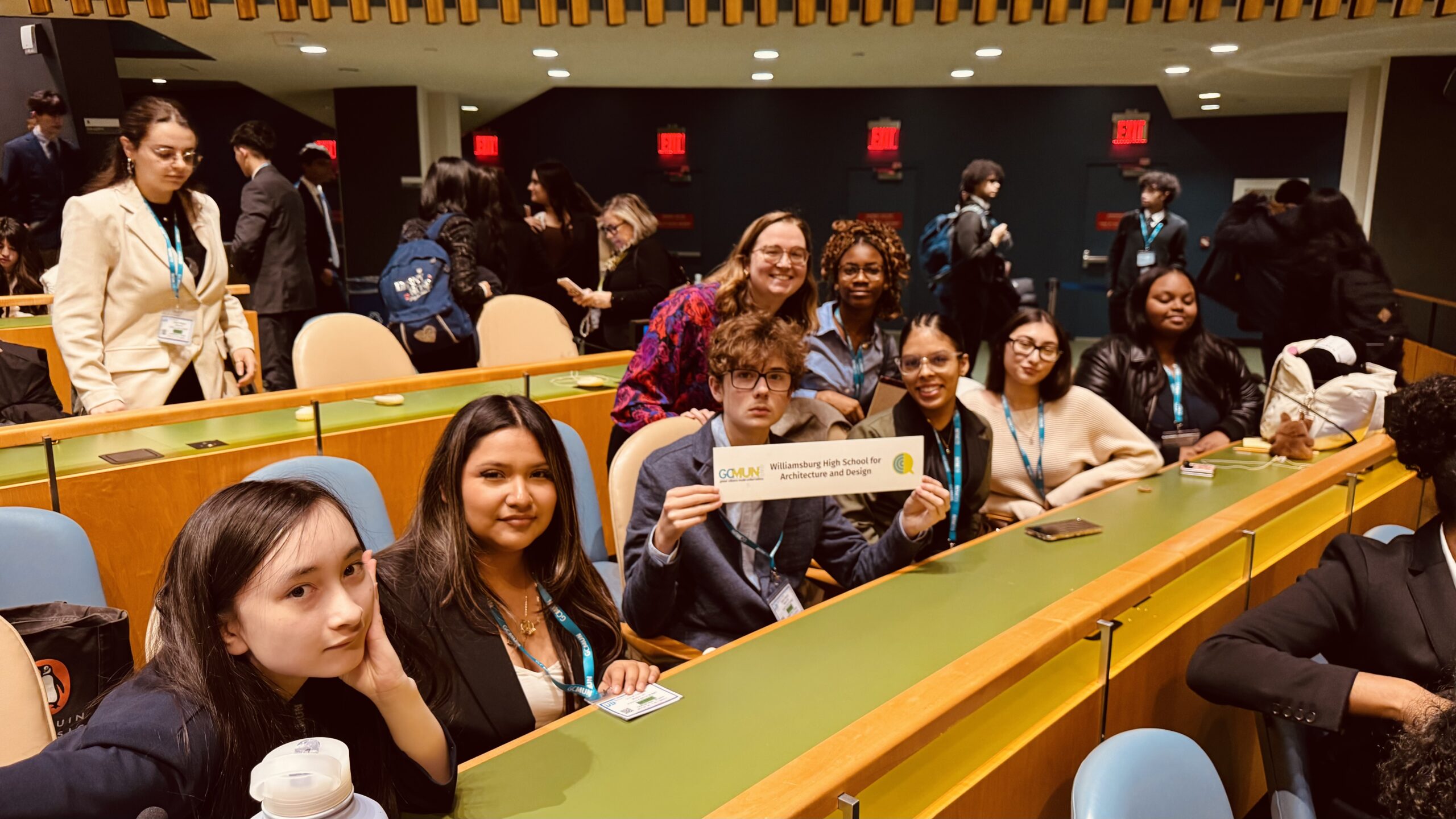
Each year, WHSAD expands on its extracurricular offerings for its students. These new opportunities allow more students to participate in passion projects and, in turn, learn more about themselves. While many of the projects fall within the realm of the school’s bread and butter of architecture and design, we also maintain a strong interest in developing programs in our humanities department.
This year, our students delved into global investigations through their participation in Model U.N. and gained a greater understanding of diplomacy and debate. As per its website, “Model UN simulations engage hundreds of thousands of students each year, helping them to learn more about the principles of the UN and how it functions. Many of today’s leaders in law, government, business and the arts – including at the UN itself – participated in Model UN as students.” WHSAD’s U.S. History and A.P. Human Geography teacher, Ms. Johnston spearheaded the implementation of the program, including numerous sessions in which students learned about the process of preparing for the culminating conference at the United Nations. Through this experience, students learned the intricacies and nuances of global affairs and how variables such as resources and political volatility influence a nation’s perspective regarding universal issues.
In the following narratives, participating student, Iyanuoluwa Adelakun and U.S. Hitory/AP Human Geography teacher, Ms. Johnston, share their thoughts as to the processes, the skills students developed, and what adjustments they could make in preparation for next year’s program.
Iyanuoluwa Adelakun, Sophomore
Describe the experience at the United Nations.
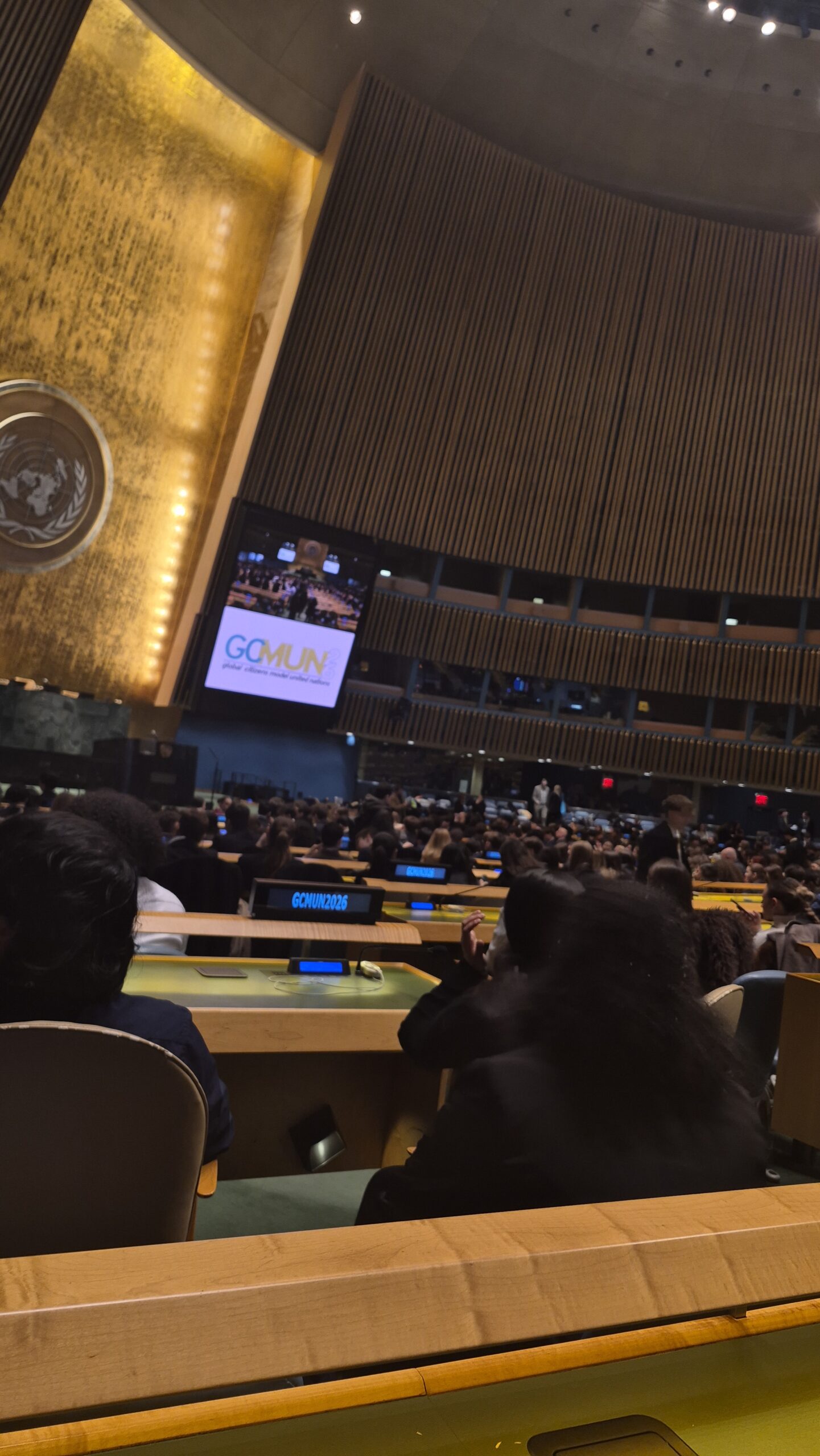
The experience at the United Nations was great, for the people who attended met U.N. building, meeting the director-general for the first time. After we went to the hotel, meeting for chairs for the first time at the conference. I think there are eight committees, and there were different conference rooms for each committee. I was in UNDP. The chairs in each committee explained how the conference works, and I learned that there is moderated caucus and unmoderated caucus. In the moderated caucus, students call for a motion they want, with how long the motion is going to last and the speaking time. Students representing their country, called delegates, vote whether or not they agree or disagree to a motion. If a majority of delegates agree, the motion passes. Once the motion passes, delegates raise their palettes if they want to talk, and the chair speaking chooses which delegate to call on. In the unmoderated caucus, delegates form a group with what they want to talk about. There were groups on funding, climate change and more. Speeches took place before each caucus. On the second day, there were moderated and unmoderated caucuses for planning a resolution. Also, we had a party the second day. On the third day there were final draft for the resolution. The chairs answered questions about them, called delegates who had a Honorable Mention. After that, the award ceremony was held.
How did you prepare for the Model U.N?
I prepared for Model U.N by answering questions Ms. Johnston assigned. After I finished answering the questions, I took parts of the questions to make paragraphs. For my speech, I researched how scarcity affects the country I represent.
What would you do differently now that you have the experience?
Now that I have experience, I would research many aspects of the country I am representing , like how technology, agriculture, tourism, housing, climate change, pollution, etc affect the country I am going to represent. I can increase my chances of talking more.
What was it like hearing from students from other schools?
It was delightful hearing from students from other schools. One student who stuck out was a girl representing Nigeria using quotes to relate to what she was talking about. She had quotes from Avatar the last Airbender and Batman. Another student representing the Russian Federation spoke in different languages.
Students from other schools talked about their life. One of the students said she started driving at 15, another student said that she is from ShangHai, China. One of the reasons I am glad I talked to students is because international courses was brought to my mind.
What was the biggest challenge and how did you deal with the challenge?
The biggest challenge was getting ready to speak out. When I had something to talk about what is happening to the country I was representing, I was really unsure, thinking what if I am wrong?, what if it is not good enough? When the topic was brought up again, I decided to get ready to speak, but I didn’t get called up by the chair speaking, when another topic was brought- I tried to reword what I had to make to make it sense to the topic that was brought as much as possible in case the chair speaking calls the country I was representing, but I didn’t get called on the second time.
Ms. Johnston
-Please describe the Model UN experience for those who are not familiar with the program.
– The Model UN program is a simulation where students conduct research on an assigned topic and country. They then participate in a 3 day conference where they meet with students from around the world who have researched the same topics for other countries. In these mock-commitees, they write UN style resolutions they believe will address their assigned issue. The experience requires rigorous research and writing in preparation for the conference and encourages students to practice their public speaking when they present their ideas.
-What was the process like for the participating students and what might that process look like next year given what you now know?
– I met with students once a week. During those meetings, students conducted their research. Our students were all working either on sustainable development or on greenwashing, so they were able to share ideas, especially during the background research phase. At the end of the meetings, I asked students to share what they learned to practice speaking about their issues.
Next year, I would like to focus on more practice debate/public speaking skills during the meetings. I hope this will also foster deeper communication and community within the team. I would like to have mini sessions where students model what they’ll do at the conference one day a week, and open work time where students can develop their research and writing on their own. I also see substantial opportunities for student leadership next year! In my dream situation, we’d transition towards a student-run club.
-What are some specific memorable moments from this year’s program? Why do those moments stand out to you?
– I was really proud of the first time students did a mini research and presentation session. This was the first time I saw students’ passion for international issues, and that enthusiasm was at the core of what I want this club to be.
Coming out of the first session, students were really excited about the work they’d done and couldn’t wait to tell me about the alliances they were forming. That sense of community and excitement really embodied what I was hoping to see with this experience.
-What does the Model UN provide for participating students? What specific hard and soft skills do the students develop, and how did you see the students develop these skills this year?
– Students conducted fairly rigorous research. They were reading legal documents, assessing the reliability of sources, strategizing about which countries might align on their issue, and otherwise showing very high level social studies skills. I also saw their writing improve over the course of the semester, and they each produced their first ever true research paper.
– In terms of soft skills, I found that students really worked on their communication with other teams and on advocating for themselves and making themselves heard. I was really proud of how they showed up to the conference with confidence and trust that they had something work contributing.
-What did you learn about yourself as an educator from this experience?
– This experience really reinforced how much I love learning from my students. They know so much more about greenwashing laws in the Netherlands than I do now, and when our committees got switched around, students were much better at catching each other up than I was.